

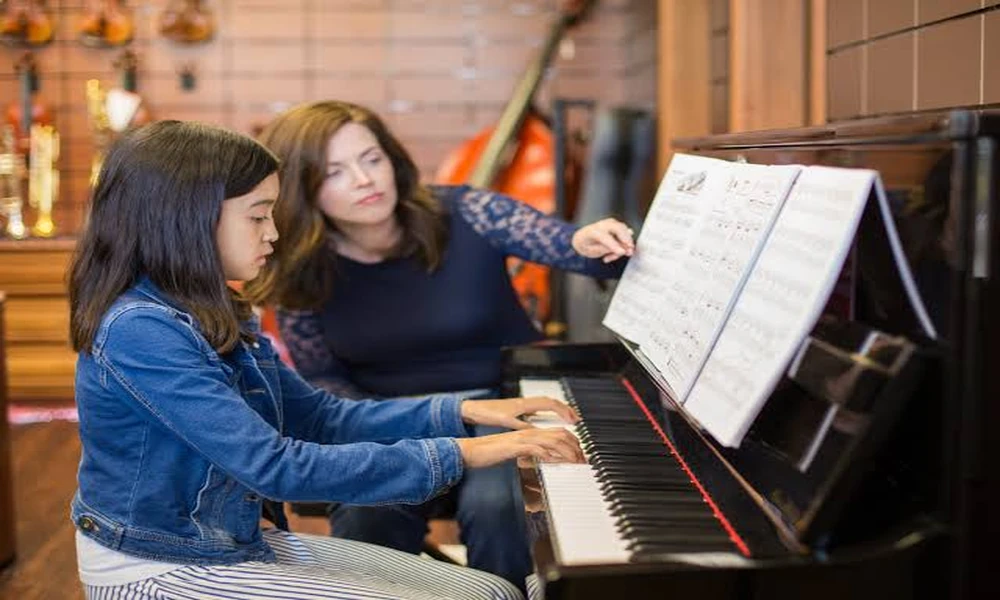
Many parents assume earlier is always better when starting a child on piano, and enrol a four-year-old expecting the early start to pay off in faster progress later. Readiness matters more than age: a child needs enough finger strength to press keys with control, enough attention span to sit through a full lesson, and enough basic interest that practice does not become a daily battle. Understanding what actually predicts success in piano lessons for kids prevents the common pattern where an unready child is enrolled early, struggles, and quietly gives up before the instrument had a fair chance.
Readiness Signs Matter More Than Age
A child who can sit still through a fifteen-minute activity, follow a two-step instruction, and shows unprompted curiosity about the instrument is generally ready, regardless of whether they are four or seven. Enrolling before these signs appear usually produces a frustrating first term for both child and teacher, and the resulting early dropout is often blamed on the child disliking piano when the real issue was starting before readiness caught up.
What a Structured Curriculum Actually Looks Like
A properly structured programme sequences technique, note reading, rhythm and repertoire together rather than simply working through a songbook from front to back. Ask to see the actual curriculum framework a studio follows, whether that is a published method book series or an in-house syllabus, since a vague answer usually means lessons are improvised week to week rather than building toward anything specific.
Group Versus One-to-One for Young Beginners
Group lessons for young children add a social, game-like element that keeps engagement high in the first year, though technical correction is necessarily lighter than in one-to-one lessons. One-to-one lessons allow faster technical progress but demand more sustained focus from a young child, which is why many studios start children in small groups and shift to individual lessons once basic attention and technique are established.
Choosing Between Exam-Track and Casual Learning
An exam-track programme, working toward ABRSM or similar grades, gives clear milestones and an external benchmark that some children find motivating and others find stressful. A casual, repertoire-driven approach skips the exam pressure entirely and lets pace follow interest, which suits a child prone to performance anxiety better than a rigid grading structure. Deciding between an exam-focused and a casual approach to piano early avoids switching tracks mid-year, which unsettles most young students.
How Much Parental Involvement Is Actually Needed
Younger children generally need a parent present for at least part of home practice, prompting rather than instructing, since a six-year-old cannot yet self-direct twenty minutes of focused repetition. That involvement should taper as the child matures and takes ownership of practice, and a teacher who never discusses the parent’s role at home is leaving a significant part of progress to chance.
Reading Progress Reports Properly
A useful progress report names specific technical points, such as hand position or rhythmic accuracy, rather than offering only general encouragement like doing well. Parents should expect concrete feedback after each term, and a studio that only ever reports positively, with no specific area flagged for improvement, is either being generous with praise or not tracking progress closely enough to say anything more precise, which is worth raising directly rather than assuming everything is fine.
When to Consider Changing Teachers
A mismatch shows up as a child who dreads lessons despite enjoying music generally, or a teacher who cannot explain what the child is working on when asked directly. Changing teachers is not a failure on the child’s part, and a brief adjustment period after a switch is normal; persistent dread after several months with the same teacher is the stronger signal that the relationship, not the instrument, is the problem worth addressing directly rather than waiting for it to pass on its own.
Recitals and Performance Opportunities
Regular, low-stakes performance opportunities, even something as simple as playing for family at home, build comfort with an audience well before any formal recital. Studios that offer termly recitals give children a concrete goal to prepare toward, which often sustains motivation better than practice for its own sake, though a child with strong performance anxiety may need a gentler, smaller-audience option first.
Budgeting for Instrument and Lessons Together
A digital piano with weighted keys is a reasonable, more affordable starting instrument, provided the key action closely mimics an acoustic piano’s resistance, since technique built on an unweighted keyboard transfers poorly. Factor in lesson fees, instrument cost or rental, and exam fees if pursuing a graded track, since the instrument alone is rarely where the real budget commitment sits over a full year.
Deciding What’s Right for Your Child
The right setup for piano lessons for kids depends on the individual child’s attention span, temperament and interest far more than on any general rule about starting age or teaching method. Watching for genuine readiness signs before enrolling, and staying alert to a mismatch with a teacher rather than assuming any dropout reflects the child’s ability, keeps the decision grounded in the child in front of you rather than in general advice.
