


The Benefits of Personalized College Admissions Strategy SessionsIntroduction
Applying to college can feel like navigating a complex maze. Many factors contribute to an admissions decision, far beyond just grades and test scores. As of May 2026, one element that consistently sparks questions and confusion among applicants and their families is Demonstrated Interest.
This concept refers to the various ways students show a college their genuine enthusiasm for attending. For many institutions, understanding an applicant’s level of interest is a critical piece of the puzzle. It helps colleges predict who will enroll if admitted, which impacts their overall yield rates and rankings.
In this extensive guide, we will demystify demonstrated interest. We will explore why some colleges track it and others do not, the specific actions that count (and those that don’t), and how much weight it carries in the admissions process. We’ll also discuss how to strategically approach demonstrated interest based on your target schools. Understanding these nuances is key to crafting a compelling application, and for many, a personalized college admissions strategy can be invaluable in navigating these complexities. Our goal is to equip you with the knowledge to engage thoughtfully and authentically with colleges, enhancing your application journey.
Demystifying Opaque Admissions Variables with a Personalized College Admissions Strategy
The college admissions landscape, particularly for selective institutions, is often characterized by a degree of opacity. While academic achievements and extracurriculars are clear metrics, factors like demonstrated interest can seem more elusive. This is where a personalized college admissions strategy becomes crucial, helping families understand and navigate these less obvious variables.
Colleges track demonstrated interest primarily as a tool for yield management. The “yield rate” is the percentage of admitted students who choose to enroll. A higher yield rate can positively impact a college’s rankings, financial stability, and perceived selectivity. To predict this, colleges employ sophisticated Customer Relationship Management (CRM) systems, such as the widely used Slate platform. These systems meticulously log every interaction a prospective student has with the institution, from website clicks to campus visits. This data helps admissions offices gauge a student’s likelihood of accepting an offer of admission.
According to a detailed analysis by College Transitions, “The Invisible Lever: How Demonstrated Interest Quietly Shapes Admissions Decisions at 175 Selective Colleges,” a significant portion of selective colleges factor demonstrated interest into their decisions. While the National Association for College Admission Counseling (NACAC) reports that approximately 20% of colleges consider demonstrated interest “considerable” or “important” in admissions decisions, other sources refine this, noting that 16% of colleges consider it to have “moderate” or “considerable” importance. These statistics underscore that demonstrated interest is not a universal factor, but where it is considered, it can play a meaningful role.
Understanding which colleges value demonstrated interest, and to what degree, is a cornerstone of effective college planning. A personalized strategy helps students focus their efforts where they will be most impactful, avoiding wasted energy on schools that don’t track it, while ensuring genuine engagement with those that do.
How Strategy Sessions Navigate Demonstrated Interest and Yield Management
Effective college admissions strategy sessions often delve deep into the nuances of yield management – a critical concern for many colleges. Yield management is essentially a college’s effort to accurately predict and influence how many admitted students will ultimately enroll. This directly impacts their class size, budget, and institutional reputation. Demonstrated interest acts as a key indicator in this prediction.
To understand a college’s stance on demonstrated interest, we often turn to the Common Data Set (CDS). This publicly available document provides colleges’ self-reported statistics, including how they weigh various admissions factors. Specifically, Section C7 of the CDS outlines the importance colleges assign to factors like grades, test scores, essays, recommendations, and, crucially, demonstrated interest. Colleges typically categorize demonstrated interest as “Very Important,” “Important,” “Considered,” or “Not Considered.”
As of May 2026, resources like “Do Colleges Track Demonstrated Interest? (2026 List + Guide)” from The College Curators provide updated insights into which institutions consider this factor. This information is dynamic, with policies evolving, as seen with Washington University in St. Louis’s recent updates.
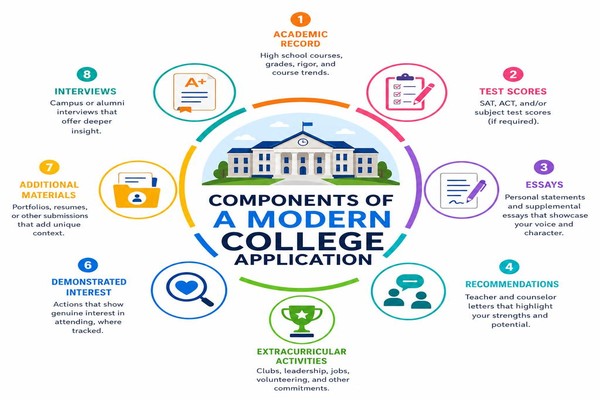
Here’s a general breakdown of how different college categories tend to approach demonstrated interest:
College Category Likelihood of Considering Demonstrated Interest Typical Importance (CDS Section C7) Examples (General) Highly Selective (Ivy League & equivalents) Low to None Not Considered Harvard, MIT, Stanford, UC campuses Selective Private (Moderate to High) High Important / Very Important Tulane, WashU, Boston College, Tufts, Vanderbilt Mid-Tier Private High Important / Considered Many liberal arts colleges, regional universities Large Public Universities Low to None (unless out-of-state) Not Considered / Considered Most state flagship universities This table illustrates that demonstrated interest is far from a universal factor. Our strategy sessions help students decipher these differences, ensuring their engagement is targeted and effective.
Designing a Personalized College Admissions Strategy for High-Interest Schools
For colleges that actively consider demonstrated interest, a tailored approach is vital. Take Tulane University, for example, which often rates demonstrated interest as “Very Important” in its admissions process. Similarly, Washington University in St. Louis (WashU) has significantly evolved its policy. As of April 2026, WashU announced it is formally beginning to consider demonstrated interest as part of its review process and has added an Early Action option. This move underscores the increasing strategic importance of demonstrated interest for institutions aiming to manage their yield. At WashU, a substantial 61% of the class is filled through Early Decision, which is widely recognized as the strongest form of demonstrated interest due to its binding nature.
For schools like these, a personalized college admissions strategy would emphasize specific, high-impact actions. This could include:
- Early Decision/Early Action applications: As seen with WashU, applying through an early round sends a clear signal of commitment.
- Official campus visits: Registering for tours, information sessions, and open houses creates a documented record of your presence.
- Meaningful interactions with regional admissions officers: These officers often serve as advocates for students from their assigned territories. Engaging with them at college fairs, high school visits, or through thoughtful emails can make an impression.
- Targeted engagement: Attending major-specific webinars, connecting with faculty in your area of interest, or participating in virtual events relevant to your academic goals.
Resources like “The 99 Demonstrated Interest Colleges: Complete List” from PrepScholar can help identify other institutions that prioritize this factor, allowing students to focus their efforts strategically. The goal is to show genuine enthusiasm and a strong likelihood of enrollment, not just to check boxes.
Analyzing Highly Selective Institutions That Do Not Track Engagement
On the other end of the spectrum are the highly selective institutions, including most of the Ivy League schools, as well as powerhouses like MIT, Stanford University, and the University of California campuses. These institutions typically state in their Common Data Set that they do not consider demonstrated interest. Why? Because their yield rates are already extraordinarily high. For instance, Harvard University boasts a yield rate of approximately 84%, Princeton University around 70%, and Yale University approximately 72%. With such a high percentage of admitted students choosing to enroll, these colleges simply don’t need to use demonstrated interest as a predictive tool.
However, this doesn’t mean engagement is entirely irrelevant. As Bucknell University’s blog, “What is Demonstrated Interest in College Admissions?”, points out, even if not formally tracked, genuine interaction can still strengthen an application indirectly. For example, a student who has thoroughly researched a college and engaged with its offerings will likely write a more specific and compelling “Why Us?” essay. This essay specificity demonstrates a deep understanding of the institution’s unique programs, culture, and opportunities, which can be highly influential in a holistic review process. While not labeled “demonstrated interest,” this level of engagement showcases genuine intellectual curiosity and fit, which are always valued. Our approach ensures that even for these schools, students are encouraged to engage meaningfully, not just for the sake of tracking, but to genuinely assess fit and craft a more persuasive application.
Tailoring Engagement: Strong vs. Weak Signals of Interest
Understanding the hierarchy of “signals” is crucial when it comes to demonstrating interest. Not all actions carry the same weight in the eyes of an admissions committee. Academic research, such as the paper “DEMONSTRATED INTEREST: SIGNALING BEHAVIOR IN COLLEGE ADMISSIONS” published in the Wiley Online Library, highlights the concept of “signaling behavior” and the “cost of contact.” This research suggests that actions requiring more effort or resources from the applicant are generally perceived as stronger indicators of genuine interest.
Here’s a breakdown of strong versus weak signals:

Strongest Forms of Demonstrated Interest (High Cost of Contact):
- Applying Early Decision (ED): This is unequivocally the strongest signal. It’s a binding commitment, telling the college that if admitted, you will enroll. It removes all doubt about your interest.
- Official Campus Visits: Registering for and attending an in-person campus tour, information session, or open house. This demonstrates a significant investment of time and often money. Colleges track these events meticulously.
- Admissions Interviews: Participating in an optional interview (whether with an admissions officer or an alumni) shows initiative and allows for a personal connection.
- Meaningful Engagement with Admissions Officers: Thoughtful, specific questions posed to an admissions representative at a college fair or during a high school visit.
- Targeted Academic Engagement: Attending a specific departmental open house, sitting in on a class (if offered), or reaching out to a faculty member with a well-researched question.
Moderate Forms of Demonstrated Interest (Medium Cost of Contact):
- Virtual Information Sessions/Webinars: Attending online events, especially those requiring registration, still shows a commitment of time.
- Engaging with Applicant Portals: Logging in regularly, completing optional sections, and ensuring all application materials are submitted well before deadlines.
- Thoughtful “Why Us?” Essays: Crafting a highly specific essay that references unique programs, professors, or campus culture demonstrates deep research and genuine fit.
- Submitting an Application Early (non-ED/EA): While not as strong as ED/EA, applying weeks before the deadline can still signal organization and priority.
Weakest Forms of Demonstrated Interest (Low Cost of Contact):
- Email Opens and Clicks: While colleges do track these (thanks to CRM systems), they are passive actions. Opening an email or clicking a link is easy and doesn’t signify deep commitment.
- Signing Up for Mailing Lists: A basic first step, but not a strong indicator on its own.
- Social Media Follows/Likes: While it shows awareness, it’s a very low-effort interaction and rarely factored into admissions decisions.
- Generic Communications: Sending form emails with questions easily answered on the website, or repeated, vague inquiries.
The key is to prioritize the stronger signals for schools where demonstrated interest matters, ensuring that every interaction is authentic and purposeful.
Balancing Academics and Engagement in Your Personalized College Admissions Strategy
Demonstrated interest, even in its strongest forms, is rarely a substitute for strong academic credentials. Colleges primarily look for students who are prepared to succeed academically. This means your GPA, the rigor of your coursework, and often your SAT scores (for schools that still require or consider them) remain foundational. Similarly, your extracurricular activities and the impact you’ve made in your community are vital components of your application.
Demonstrated interest typically functions as a tiebreaker. If two applicants have very similar academic profiles, extracurricular achievements, and essay quality, the one who has genuinely and strategically demonstrated interest in the institution might gain an edge. It signals to the college that this student is not only qualified but also highly likely to accept an offer and contribute positively to the campus community.
Our personalized college admissions strategy emphasizes a holistic approach. We guide students on how to maintain strong academics and build a compelling extracurricular profile, while also strategically weaving in demonstrated interest where it counts. For a comprehensive overview of what colleges look for at different stages, students can refer to a “College Application Checklist by Grade” or consult a broader “College Admissions Timeline” to ensure they are on track with all aspects of their application. It’s about presenting a well-rounded and deeply engaged profile.
Addressing Equity and Accessibility in Admissions Planning
The practice of tracking demonstrated interest, particularly through activities like campus visits, raises significant questions about equity and accessibility. For many students, especially those from low-income backgrounds or who are first-generation college applicants, the financial and logistical barriers to visiting campuses can be insurmountable. Travel costs, time off from work or school, and lack of awareness about the admissions process can create a systemic bias against these deserving students.
Colleges are increasingly aware of this challenge. Some institutions offer fly-in programs that cover the costs for underrepresented students to visit campus. Virtual alternatives have also become more sophisticated, allowing students to explore campuses and engage with admissions staff from anywhere.
In our personalized college admissions strategy sessions, we prioritize ethical counseling. We help students identify free or low-cost ways to demonstrate interest, such as engaging with virtual events, sending thoughtful emails, and crafting highly specific “Why Us?” essays. We also advocate for students to inquire about fee waivers for application costs and travel assistance if available. The goal is to ensure that every student, regardless of their socioeconomic background, has the opportunity to present their best self to colleges and demonstrate their genuine interest effectively.
Frequently Asked Questions About College Admissions Strategies
Navigating the complexities of demonstrated interest often leads to a host of questions. Our personalized college admissions strategy sessions aim to clarify common misconceptions and provide actionable advice for strategic planning. Here, we address some of the most frequently asked questions.
How do colleges track digital engagement like email opens?
Colleges utilize sophisticated CRM (Customer Relationship Management) software, such as Slate, to track virtually every digital interaction a prospective student has with the institution. When you open an email from a college, click a link, or spend time on specific pages of their website, this activity is logged. The system records timestamps, click behavior, and even website page duration. This data helps colleges build a profile of your engagement and can contribute to an “interest score” assigned to your application. To ensure all your engagement is properly attributed, we always advise students to use the same, consistent email address and personal information across all college communications and registrations.
What are the most common mistakes students make when showing interest?
Students, in their eagerness, sometimes make missteps that can undermine their efforts:
- Stealth Visits: Visiting a campus without officially registering for a tour or information session means the college has no record of your presence. Always sign in!
- Generic “Why Us?” Essays: Submitting a boilerplate essay that could apply to any school signals a lack of genuine research and specific interest.
- Excessive or Generic Emailing: Bombarding admissions officers with questions easily found on the website or sending frequent, vague emails can be perceived as annoying rather than genuinely interested. Quality over quantity is key.
- Over-reliance on Social Media: While following a college on social media is fine, it’s a very weak signal and should not be considered a primary method of demonstrating interest.
- Manufactured Outreach: Trying to “game the system” by clicking every link or sending insincere emails can backfire. Admissions officers are adept at discerning genuine interest from manufactured engagement.
Is Early Decision always the best way to demonstrate interest?
Applying Early Decision (ED) is undeniably one of the strongest forms of demonstrated interest because it signifies a binding commitment to enroll if admitted. For colleges, an ED application provides significant yield assurance, making it a highly attractive option.
However, ED is not always the best choice for every student. It’s crucial to consider financial aid implications. If you need to compare financial aid packages from multiple institutions, a binding ED agreement might not be suitable. Our personalized college admissions strategy helps families weigh the benefits of ED against potential financial aid needs. For students who are confident about their top-choice school and its affordability, ED can offer a significant admissions advantage. For others, Early Action (EA) or Regular Decision with strong demonstrated interest through other means might be more appropriate, allowing for strategic application timing and financial aid comparisons.
Conclusion
The journey through college admissions is complex, with demonstrated interest standing out as a particularly nuanced factor. As of May 2026, understanding its role is more critical than ever, especially with colleges continually refining their yield management strategies. From the sophisticated CRM systems tracking your digital footprint to the profound impact of a binding Early Decision application, every interaction can play a part.
Our goal is to empower students and families to navigate this landscape with confidence. By distinguishing between strong and weak signals, understanding which colleges value demonstrated interest, and addressing the inherent inequities in the process, we can help you engage authentically and effectively. The most impactful demonstrated interest stems from genuine curiosity and a true desire to find the right fit. When combined with a well-rounded academic and extracurricular profile, strategic engagement can significantly enhance your application.
A personalized college admissions strategy helps align your efforts with your aspirations, reducing stress and maximizing your potential for long-term success. It’s about making informed decisions, presenting your best self, and finding the college where you will truly thrive.
