

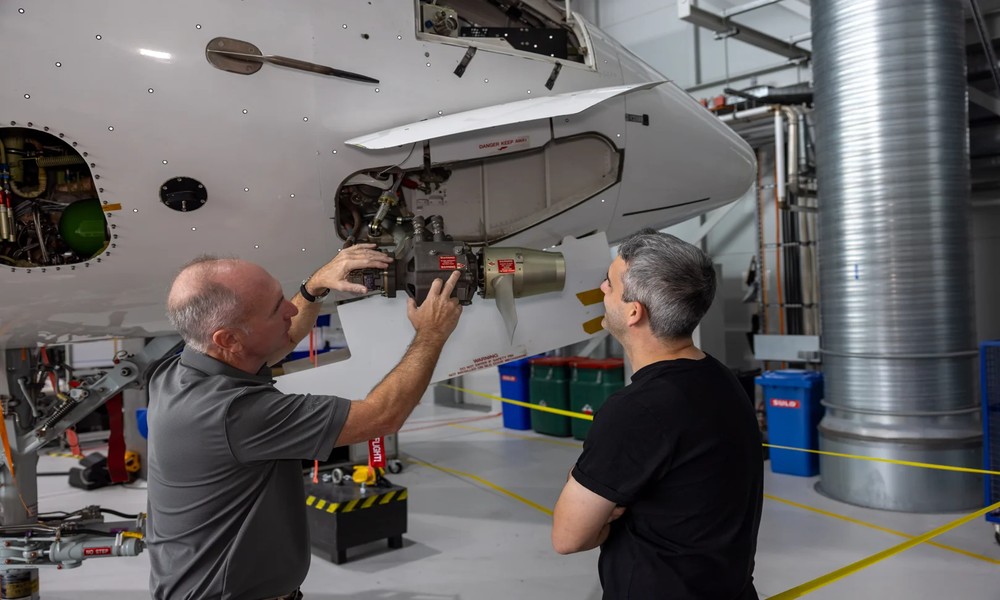
The Role of EASA Part 147 in Aviation Maintenance Training
The global aviation industry operates on a foundation of stringent safety standards. At the heart of this safety culture are the skilled professionals who maintain our aircraft. Their continuous professional development is key to ensuring every flight is secure.
As aircraft technology advances and new variants emerge, the need for specialized knowledge grows. Understanding Aircraft differences training EASA is therefore essential for maintenance personnel. This specific training ensures technicians can safely and competently work on a wide range of aircraft.
In this guide, we will explore the critical role of EASA regulations in aviation maintenance training. We will differentiate between various training types, detail practical requirements, and look at future trends. Our aim is to provide a comprehensive overview for anyone involved in upholding global aviation maintenance standards.
In the realm of aviation maintenance, the European Union Aviation Safety Agency (EASA) establishes the benchmark for training and certification. Central to this framework are EASA Part-147 and Part-66 regulations, which together ensure that maintenance personnel are not only theoretically knowledgeable but also practically competent to perform their duties. Part-147 specifically governs Approved Maintenance Training Organisations (MTOs), setting the standards for their facilities, instructors, and training programmes. These organisations are the cornerstone for delivering the high-quality education required for aircraft maintenance engineers.
We understand the importance of robust training programmes. Our commitment to excellence in aviation education is reflected in our comprehensive offerings, including specialized Academy EASA maintenance training. This ensures that technicians receive the most current and compliant instruction available, preparing them for the complexities of modern aircraft.
Regulatory Framework and Compliance
The EASA regulatory framework for maintenance training is meticulously designed to uphold global safety standards. Annex IV (Part-66) of Regulation (EU) No 1321/2014 outlines the essential requirements for certifying staff and approved organisations, ensuring a consistent level of competence across the industry. Compliance with these regulations is not merely a bureaucratic exercise; it is fundamental to guaranteeing the airworthiness of aircraft. Approved Part-147 organisations must operate under a stringent quality management system, covering every aspect from curriculum development and instructor qualifications to examination procedures and facility maintenance. This rigorous oversight ensures that all training provided meets EASA’s exacting standards, preparing individuals for the challenges of maintaining complex aircraft systems.
Certification and Licensing Paths
EASA Part-66 defines various categories of aircraft maintenance licences, each with specific privileges and requirements. The most common are Category B1 (Aircraft Maintenance Technician – Mechanical) and Category B2 (Aircraft Maintenance Technician – Avionics). Category B1 licences cover mechanical systems, including airframe, engines, and structural components, often further subdivided by aircraft type (e.g., turboprop, jet). Category B2 licences focus on avionics and electrical systems. To obtain these licences, individuals must complete a modular theoretical knowledge examination and demonstrate practical competency, typically through a combination of approved training and practical experience.
Beyond the basic licence, technicians must also acquire specific type ratings for the aircraft they intend to maintain. A type rating signifies that a technician has received training on the particular aircraft type, covering its systems, structure, power plant, and associated maintenance tasks. These type ratings are crucial for ensuring that maintenance personnel possess the in-depth knowledge required for safe and effective aircraft upkeep. The journey from initial licence to multiple type ratings is a continuous process of learning and specialisation, reflecting the dynamic nature of aviation technology.
Understanding Differences Training for Maintenance Personnel
As aircraft manufacturers continually introduce updated models and variants, maintenance personnel must adapt their skill sets. This is where “differences training” becomes vital. For maintenance engineers, differences training addresses the specific technical variations between an aircraft type they are already rated on and a new variant within the same type rating. It’s about bridging knowledge gaps and ensuring competency on system upgrades, modified components, or new operational features without requiring a full, redundant type course.
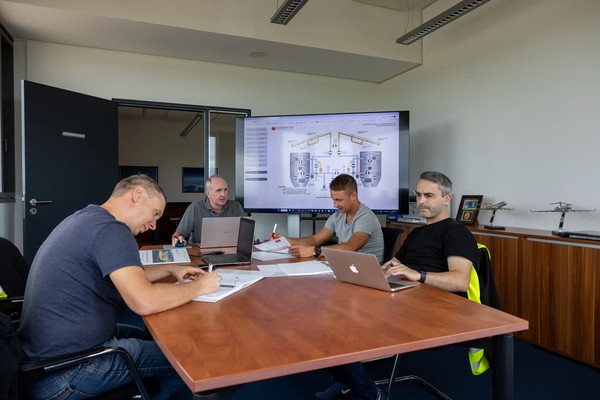
EASA regulations, particularly those related to Part-66, recognise that aircraft within a broad type rating (like the Airbus A320 family or Boeing 737 family) can have significant differences that impact maintenance procedures. Appendix III to AMC to Part-66 provides guidance on how these differences are managed. The concept extends to Operational Suitability Data (OSD) for flight crew, but for maintenance, the focus is on the specific design changes documented in the Type Certificate Data Sheets (TCDS) and manufacturer’s maintenance manuals.
Defining Differences vs. Full Type Courses
The distinction between differences training and a full type course is crucial for efficiency and regulatory compliance. A full type course provides comprehensive theoretical and practical training for an aircraft type from the ground up, typically required when a technician is adding a completely new aircraft type to their licence (e.g., transitioning from a single-aisle to a wide-body aircraft).
Differences training, conversely, is tailored to address specific variations. For instance, if a technician is already rated on an Airbus A320 (CFM56 engine) and needs to work on an A320neo (LEAP engine), differences training would focus on the new engine type, its systems, and associated maintenance procedures. EASA FAQs clarify that if aircraft types have different type ratings per Appendix I to AMC to Part-66, then either differences training (theoretical and practical) or a full course is needed. However, for variants within the same type rating, such as an A320 to an A321, specific differences training might not be mandated by Part-147, but rather on-the-job training or familiarisation by the maintenance organisation. This pragmatic approach prevents unnecessary retraining while ensuring safety. The concept of “variant lists” and “horizontal lines” often used in flight crew contexts to determine training levels can also be conceptually applied to maintenance, where significant changes warrant structured training.
Task Selection and the 50 Percent Rule
A key aspect of practical differences training, especially when conducted by a Part-147 organisation, is the selection of tasks for practical assessment. EASA’s guidance, particularly in AMC 3.1(d) Appendix III point 5 f), stipulates that tasks must be representative of the aircraft and its systems in terms of complexity and diversity. This means that merely selecting simple, easily accomplished tasks is insufficient. Instead, the selection should cover main systems and ensure that at least 50% of the applicable tasks per line in Appendix III are addressed.
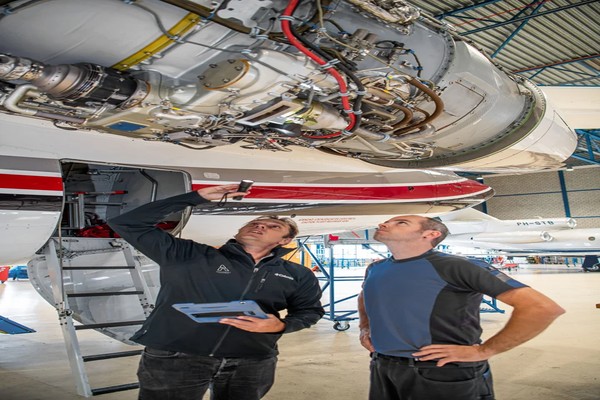
For example, if a differences course focuses on a new engine variant, the practical tasks would need to include complex procedures related to engine removal/installation, specific system checks, and fault diagnosis unique to that engine, rather than just basic lubrication tasks. This “50 percent rule” is designed to ensure that the practical element genuinely assesses a technician’s ability to handle the specific differences effectively and safely. It requires a thoughtful approach to curriculum design, ensuring that the training is not only compliant but also highly effective in preparing technicians for real-world maintenance scenarios.
Practical Elements of Aviation Maintenance Training
The theoretical knowledge acquired in classroom settings must be robustly complemented by hands-on experience. Practical training is the crucible where theoretical understanding is forged into tangible skill. For aircraft maintenance engineers, this involves working directly on representative aircraft systems, utilising maintenance manuals, and achieving proficiency with specialized tools and equipment. This ensures that when a technician encounters an issue on an actual aircraft, they possess both the knowledge to diagnose and the dexterity to rectify it.
Practical training typically covers a wide array of activities, from routine inspections and component replacements to complex troubleshooting and repair procedures. The emphasis is on developing a deep understanding of how systems interact, the correct application of maintenance procedures, and adherence to safety protocols. This blend of cognitive and psychomotor skills is fundamental to the integrity of aviation maintenance.
Training Duration and Content Requirements
The duration of practical training is not arbitrarily set but is content-driven, meaning it must be sufficient to cover all required learning objectives and practical tasks. While EASA regulations provide flexibility, they also offer recommendations, particularly for larger aircraft. For aeroplanes with a maximum take-off mass (MTOM) of 30,000 kg or more, a minimum recommended duration of two weeks for the practical element is suggested, unless a shorter period can be robustly justified to the competent authority based on the specific training objectives and pedagogical approach.
The content of practical training is meticulously planned to ensure comprehensive coverage. It encompasses a range of activities, including:
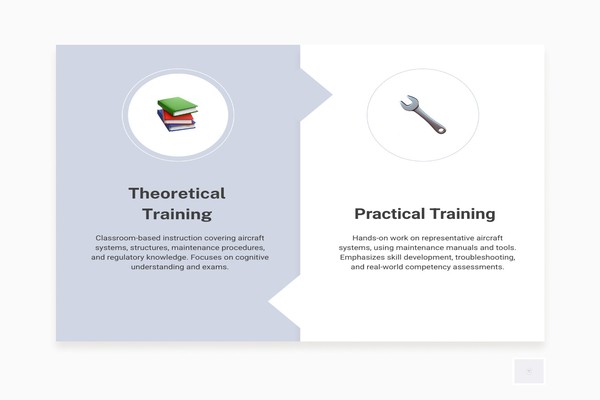
- System Familiarisation: Hands-on identification and interaction with various aircraft systems (e.g., hydraulic, electrical, pneumatic, flight control).
- Component Removal and Installation: Practising the correct procedures for replacing parts, adhering to torque settings, and ensuring proper fitment.
- Troubleshooting and Fault Isolation: Using diagnostic tools and following logical steps to identify and rectify malfunctions.
- Inspection Techniques: Applying various inspection methods, including visual, NDT (Non-Destructive Testing), and functional checks.
- Documentation: Accurately completing maintenance records, logbooks, and work orders in compliance with regulatory requirements.
The goal is to ensure that upon completion, the technician is fully capable of performing maintenance tasks on the specific aircraft type or variant safely and efficiently.
Conducting Training at Part 145 Organizations
While Part-147 organisations are the only entities approved to provide EASA aircraft type training courses, the practical element of this training can often be conducted at a Part-145 approved maintenance organisation. This arrangement offers significant benefits, allowing trainees to gain experience in a real-world operational maintenance environment. However, strict conditions apply. The Part-145 organisation must operate under the direct control and procedures of the Part-147 MTO, ensuring that the training delivered adheres to the approved syllabus and quality standards.
Effective interface management between the Part-147 MTO and the subcontracted Part-145 facility is paramount. This includes clear agreements on supervision, practical assessors, access to aircraft and tooling, and documentation of training progress. The Part-147 organisation retains overall responsibility for the quality and compliance of the entire training programme. This collaborative model ensures that students benefit from exposure to actual maintenance operations, enhancing their practical skills and understanding of the demands of the aviation industry.
Global Regulatory Alignment and FAA Accepted Standards
In an interconnected world, the harmonisation of aviation regulations is critical for global mobility and safety. EASA and the Federal Aviation Administration (FAA) in the United States, two of the world’s leading aviation authorities, have established bilateral agreements to recognise each other’s standards in many areas, including maintenance. These agreements facilitate the acceptance of maintenance training and certification across jurisdictions, enabling technicians to work on aircraft registered in different regions.
This regulatory alignment ensures that maintenance personnel trained under EASA Part-147, for example, can have their qualifications recognised, or easily converted, to meet FAA standards, and vice-versa. This mutual acceptance fosters a global workforce of highly skilled and compliant aviation professionals, contributing significantly to the overarching safety management systems (SMS) that govern international aviation. The goal is to achieve standardized curricula and practices that transcend national borders, ensuring that an aircraft maintained to EASA standards in Europe is deemed equally airworthy in the US, and elsewhere.
Bridging EASA and FAA Requirements
While significant progress has been made in bridging EASA and FAA requirements, some differences inevitably remain. For maintenance personnel, understanding these nuances is key to ensuring continuous compliance, especially when working for international operators or on aircraft that operate globally. For instance, while EASA Part-66 licences are detailed with specific type ratings, FAA Airframe and Powerplant (A&P) certificates are broader, with type ratings often added separately.
Training organisations frequently offer programmes designed to specifically address these bridging requirements, helping technicians to navigate the regulatory landscape. These “accepted training” programmes ensure that any gaps between the two regulatory frameworks are adequately covered, allowing for a smooth transition and recognition of qualifications. This approach is not just about paperwork; it’s about ensuring that the technician’s knowledge and skills meet the highest safety benchmarks, regardless of the regulatory authority. It underpins the reliability of aircraft platforms across different operational environments.
The Importance of Instructor Expertise
The quality of aviation maintenance training hinges significantly on the expertise of its instructors. An instructor’s field experience, coupled with a deep understanding of regulatory knowledge, is invaluable. They are not merely conveyors of information but mentors who impart practical wisdom, troubleshooting techniques, and a safety-first mindset. Effective instructors bring real-world scenarios into the classroom and practical workshop, helping students to grasp complex concepts and apply them effectively.
Their ability to translate theoretical knowledge into practical outcomes is crucial for developing competent technicians. Furthermore, instructors often act as role models, instilling professionalism and ethical conduct, which are paramount in the aviation industry. The credibility of a training programme is directly linked to the calibre of its teaching staff, making instructor expertise a cornerstone of robust aviation maintenance education.
Future Trends in Aviation Maintenance Training
The aviation industry is in constant evolution, and maintenance training must evolve with it. We are witnessing a significant shift towards digital learning solutions, offering unprecedented flexibility and engagement. Computer-Based Training (CBT) and Virtual Reality (VR) are no longer futuristic concepts but integral components of modern maintenance education. These technologies allow for immersive, interactive learning experiences that can simulate complex maintenance tasks in a safe, controlled environment.
Sustainability is also becoming a key consideration, influencing training content to address eco-friendly maintenance practices and the upkeep of more fuel-efficient aircraft. The trend towards self-paced modules empowers individuals to learn at their own speed, catering to diverse learning styles and schedules, while still meeting stringent regulatory requirements.
Interactive Learning and Knowledge Retention
Interactive learning tools, particularly those incorporating 3D graphics and gamification, are revolutionising how maintenance technicians acquire and retain knowledge. Traditional methods often rely heavily on static diagrams and text, which can be less engaging. Modern CBT modules, however, can provide dynamic, animated representations of aircraft systems, allowing learners to explore components, understand their functions, and simulate operational sequences in a highly visual manner.
Gamified quizzes and interactive scenarios transform passive learning into active problem-solving, significantly enhancing knowledge retention. Furthermore, these digital platforms often come with sophisticated progress monitoring and analytics tools. These allow instructors and training organisations to track individual performance, identify areas where a learner might be struggling, and tailor instruction accordingly. This personalised approach ensures that each technician achieves a comprehensive understanding of the material, leading to higher competency and safer maintenance practices.
Adapting to New Aircraft Platforms
The introduction of new aircraft platforms, featuring advanced materials like composites, highly integrated avionics systems, and novel propulsion technologies, necessitates continuous adaptation in maintenance training. Technicians must be trained on the specific characteristics and maintenance requirements of these next-generation aircraft. This includes understanding the repair methodologies for composite structures, the intricacies of advanced digital avionics, and the unique challenges posed by new engine designs.
Training programmes are continuously updated to reflect these technological advancements. This often involves collaboration between aircraft manufacturers, EASA, and Part-147 training organisations to develop new modules and update existing curricula. The emphasis is on proactive learning and ensuring that maintenance personnel are prepared for the aircraft of tomorrow, not just today. This commitment to continuous learning is paramount to maintaining the highest safety and operational standards across the global fleet.
Frequently Asked Questions about Aviation Maintenance Training
What is the difference between a full type course and differences training?
A full type course is a comprehensive training programme designed to qualify an aircraft maintenance engineer on a completely new aircraft type. It covers all aspects of the aircraft’s systems, structure, power plant, and associated maintenance procedures from the ground up. This is typically required when adding a new, distinct type rating to a Part-66 licence.
Differences training, on the other hand, is specific to variants within an aircraft type rating that a technician already holds. It focuses exclusively on the technical variations, system changes, or new technologies present in a particular variant compared to a base aircraft type the technician is already qualified on. For example, if an engineer is rated on a Boeing 737 Classic and needs to work on a Boeing 737 NG, differences training would address the specific changes between those generations, rather than re-teaching all common 737 systems. This approach efficiently bridges knowledge gaps without requiring redundant training.
Can practical training be conducted at a Part 145 organization?
Yes, practical training, which is a mandatory component of EASA Part-66 aircraft type training, can indeed be conducted at a Part 145 approved maintenance organisation. However, there are specific regulatory conditions that must be met. The Part 145 organisation cannot independently offer the type training. Instead, it must operate under the direct control and procedures of an EASA Part 147 Approved Maintenance Training Organisation (MTO).
This means the Part 147 MTO retains overall responsibility for the training programme, including the syllabus, instructor qualifications, assessment methods, and record-keeping. The Part 145 facility acts as a practical training site, providing access to real aircraft, tools, and an operational maintenance environment. This arrangement allows trainees to gain invaluable hands-on experience in a professional setting while ensuring that the training remains compliant with EASA Part 147 standards. Clear interface agreements and supervision by the Part 147 MTO are essential for this model to be effective and compliant.
How are representative tasks selected for practical assessments?
The selection of representative tasks for practical assessments in aviation maintenance training is a critical process, guided by EASA regulations, particularly Appendix III to AMC to Part-66. The aim is to ensure that the practical training and assessment accurately reflect the complexity and diversity of maintenance tasks a technician will encounter on a specific aircraft type or variant.
Key criteria for task selection include:
- Coverage of Main Systems: Tasks must cover all major aircraft systems (e.g., airframe, engines, electrical, hydraulic, avionics, flight controls).
- Complexity and Diversity: The selected tasks should not be limited to simple, routine procedures. They must include tasks of varying complexity, demonstrating the technician’s ability to perform both basic and more intricate maintenance operations, including troubleshooting.
- Representativeness: The tasks should be typical of the work performed on that particular aircraft type or variant, ensuring relevance to real-world maintenance scenarios.
- 50 Percent Rule: As per EASA guidance (e.g., AMC 3.1(d) Appendix III point 5 f)), at least 50% of the applicable tasks per line in Appendix III should be selected. This ensures a substantial and comprehensive practical evaluation.
This rigorous selection process guarantees that technicians are not just theoretically proficient but also practically capable of maintaining the aircraft to the highest safety and airworthiness standards.
Conclusion
The pursuit of global standards in aviation maintenance training is a continuous journey, driven by an unwavering commitment to safety. EASA’s robust regulatory framework, particularly through Part-147 and Part-66, provides the essential structure for developing highly competent aircraft maintenance engineers. Understanding the nuances of differences training, the importance of practical experience, and the global alignment of regulatory bodies are all critical components of this endeavour.
As technology advances and new aircraft platforms emerge, the aviation maintenance sector must remain agile, embracing digital learning tools and adapting curricula to meet future challenges. Our collective focus on a strong safety culture, continuous professional development, and the ongoing evolution of regulatory standards ensures operational excellence across the skies.
